
Examples of Toxic Masculinity and its Effects:
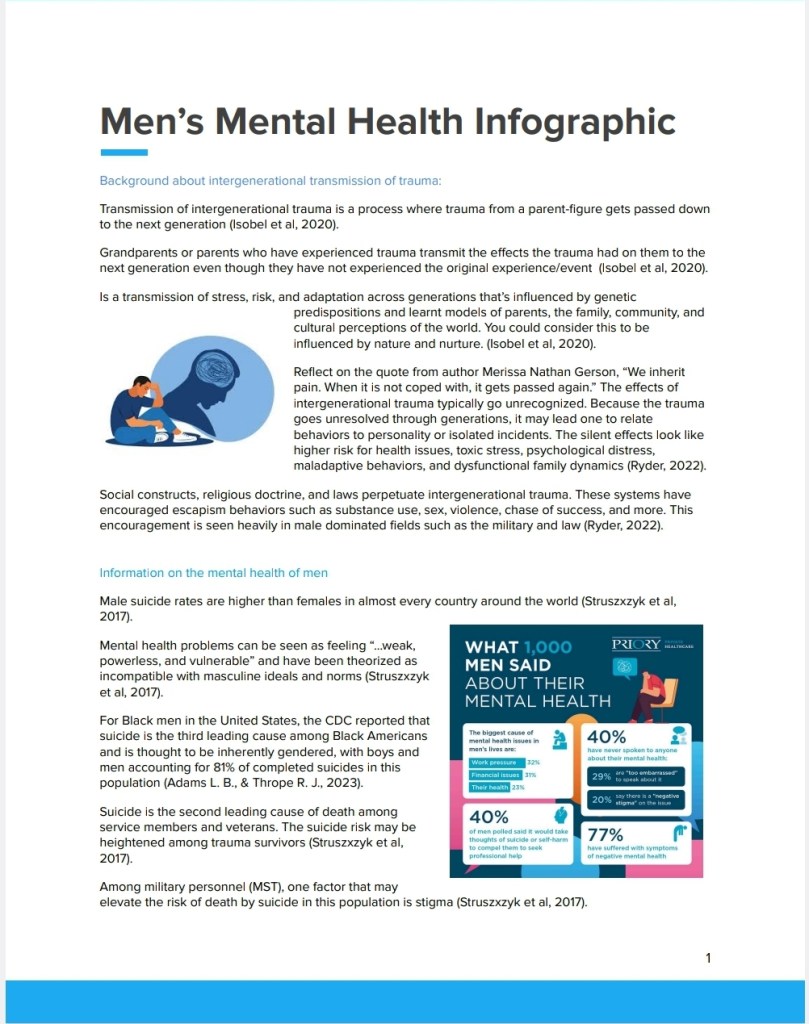
Emotional Suppression: Encourages men to suppress emotions that are not volatile in nature. Ex: promoting aggression and anger while suppressing sadness, embarrassment, or weariness. Dominance and Superiority: Values power and control over individuals. Encourages toxic interpersonal relationships as well as increased stress, anxiety, and dysregulation. Hyper Competitive Behavior: Encourages comparison to other men (physically, financially, economically, and socially). This leads to common issues such as: low self esteem, personality disorders, depression. Avoidance of Vulnerability: Societal practice that discourages men to be vulnerable or seek help for their problems, needs, and stressors. Further encourages depression, isolation, interpersonal deficits, and emotional dysregulation. Sexual Objectification: Promotes objectification of both men and women and normalizes misogyny and sexism. Women viewed as “collectables” to prove masculinity, 45 percent of men have felt pressure from other men to engage in objectification with fears of not appearing weak. Self Neglect: Discourages men from engaging in activties that encourage self-care. Ex: mindfulness activities, deep breathing, relaxation, rest days: viewed as “feminine”.
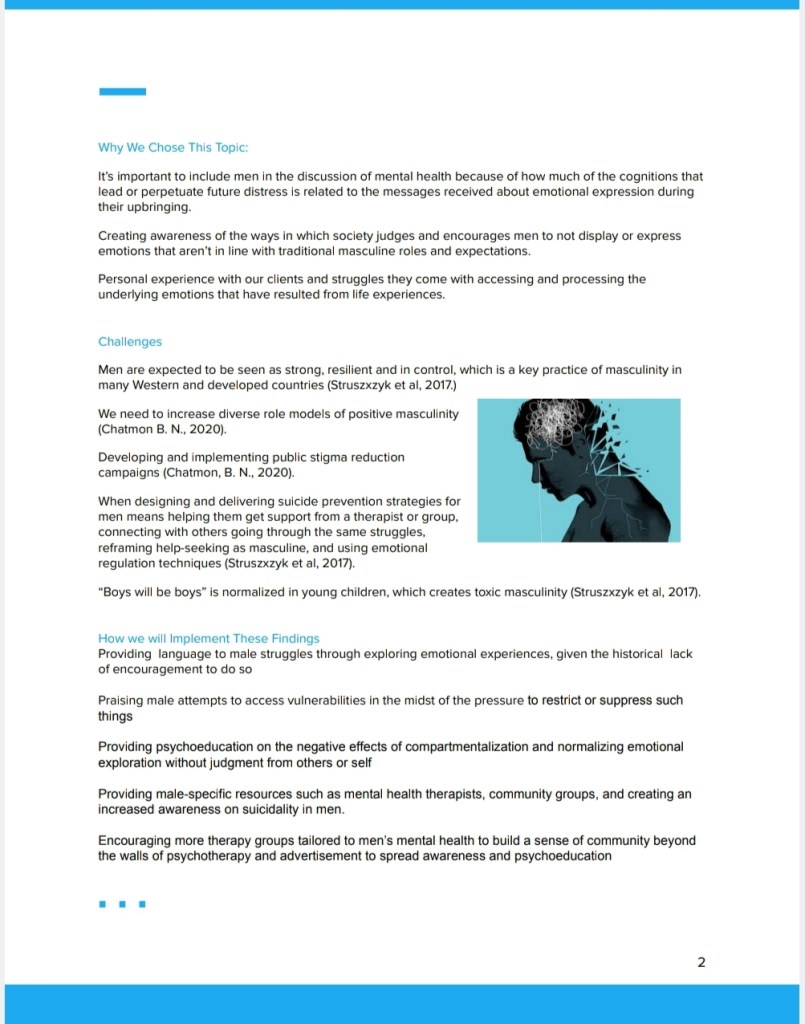
Challenges in Youth as a Result of Cultural Stigmas
Body Image and Self Esteem
Wanting to appear “muscular” or the cultural definition of “hot”.
Undiagnosed eating disorders in boys, anorexia, bulimia, body dysmorphia.
Masked as moodiness or defiant behavior.
Emotional Regulation
Inability to identify, manage, or name emotions.
Substance Abuse and Social Media:
Engaging in use of harmful substances due to peer pressure and normalization on social media.
Peer Pressure/ Conflict and Bullying
Power: desire to exercise dominance
Increase in gang activity/ desire to “defend one’s turf”
Risky Sexual Activity
Idea that manhood is defined by one’s number of sexual encounters
Higher risk for unreported sexual abuse, exposure to std’s, and social impairments
Anxiety and Depression
Loss of desire in enjoyable activities, sleeping in class, anger, poor academic performance.
Masked as defiant behavior
Positive correlation to familial dysfunction
Self harm and Suicidal Ideations
Behavioral changes, unexplained injuries, withdrawal, emotional distress
References
Adams L., B., & Thorpe R. J. Jr, (2023) Achieving mental health equity in Black male suicide prevention. Front. Public Health 11:1113222.doi: 10.3389/fpubh.2023.1113222
Blais, R. K., Xu, B., Tannahill, H., & Dulin, P. (2024). Male sex and hazardous alcohol use following military sexual assault increase suicide risk amongUS service members and veterans. European Journal of Psychotraumatology, 15(1).
https://doi-org.lib.pepperdine.edu/10.1080/20008066.2024.2312756
Branje, S., Geeraerts, S., de Zeeuw, E. L., Oerlemans, A. M., Koopman-Verhoeff, M. E., Schulz, S., Nelemans, S., Meeus, W., Hartman, C.A., Hillegers, M. H. J., Oldehinkel, A. J., & Boomsma, D. I. (2020). Intergenerational transmission: Theoretical and methodological issues and an introduction to four Dutch cohorts. Developmental Cognitive Neuroscience, 45, 100835. https://doi.org/10.1016/j.dcn.2020.100835
Chatmon B., N. Males & Mental Health Stigma. American Journal of Men’s Health. 2020;14(4). doi:10.1177/1557988320949322
Isobel, S., McChloughen, A., Goodyear, M., & Foster, K. (2020). Intergenerational trauma and its relationship to mental health care: Aqualitative inquiry. Community Mental Health Journal, 57(4), 631-643. https://doi-org/10.1007/s10597-020-00698-1
Ryder, G. (2022, April 15). Intergenerational trauma: How it affects families. Psych Central.
https://psychcentral.com/lib/how-intergenerational-trauma-impacts-families#how-its-passed-down
Struszczyk, S., Galdas, P. M., & Tiffin, P. A. (2017). Men and suicide prevention: a scoping review. Journal of Mental Health, 28(1).
Credits for this Advocacy Project: Rebecca Akpan, Sophia Alexander, Nia Jordan, Sydney Major
 .Being Heal-thy is the New STRONG.